


Step-by-Step Guide to House Lock Installation for Homeowners
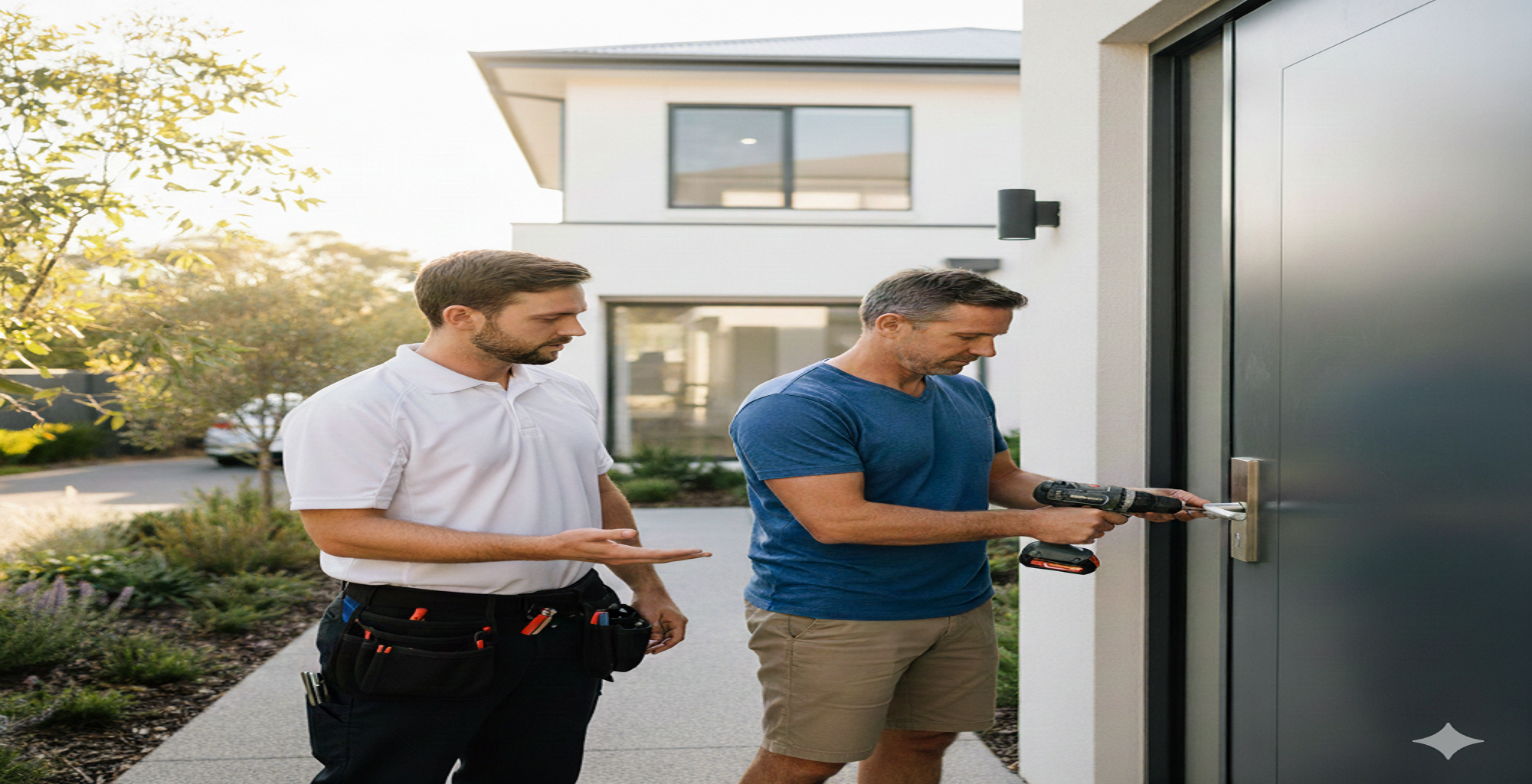
Great news indeed, a significant number of homeowners can acquire the knowledge to do the installation of the house lock hardware by themselves. Some locks, like the basic deadbolts and the standard entrance sets, can be surprisingly easy to install with DIY skills. On the other hand, the smart locks, electronic systems, and high-security locks are much more complicated and may even frustrate the most confident DIYers.
With this guide, you can install locks in your house from preparation to testing with easy steps.
Clockwork Locksmiths is always ready to assist you.
Do You Really Need to Replace Your House Lock? (Rekeying vs. Installation)
You must verify your skills before doing any residential lock installation. A lot of homeowners are under the impression that the whole door lock replacement is necessary, while in fact, just rekeying can save the day. During rekeying, the existing lock hardware is kept, but the internal pins are changed so that a new key works while the old one doesn’t. It is cheaper, faster, and usually costs $50–$100.
You should carry out a full DIY lock installation or deadlock installation when the lock is defective, outdated, or not very secure, or when you move into a place that the previous owners might have left their keys. Usually, it costs $150–$300+ for professional installation.
Clockwork Locksmiths can provide you with a free consultation prior to starting the work.
Tools & Materials You’ll Need
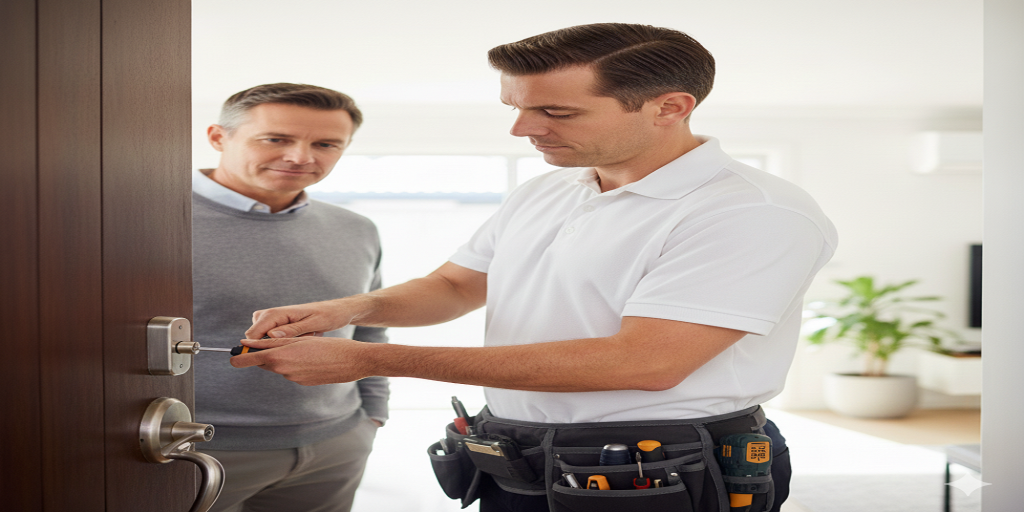
You can place a door lock without the need for a complete workshop. A vast majority of the necessary tools are already found in most homeowners’ houses.
Tools:
- Screwdrivers (Phillips + flathead)
- Drill (if holes are required)
- Tape measure
- Pencil
- Hammer
- Level
- Chisel (sometimes required)
- Set of Allen keys
Materials:
- Lock kit of your choice
- Screws, latch assembly, strike plate (often provided)
- Shims
- Silicone-based lubricant
- Work gloves + eye protection
If it seems like there is a lot on the list, you should not be concerned because Clockwork Locksmiths provides all the tools and equipment required for professional lock installation.
Preparation: Getting Your Door Ready
Before you start installing the new lock, it’s best to devote a few minutes to the door prep.
- First, take off the old lock. Unfasten the outer part and take the lock out of both ends.
- Next, measure the backset. It is the space from the edge of the door to the middle of the lock hole, which is usually 60mm or 70mm.
- Then, check the door’s thickness. The average thickness for an outer door is 1.75 inches, and for an inner door, it is about 1.375 inches.
- Now, examine the door for possible defects. You should check for cracks, ill-aligned frames, or elongated holes, as these may cause the lock not to fit properly.
If your measurements do not match the specifications of the lock you bought, then you should stop.
Installation – The Main Event
Step 1: Mark the hole positions
A lot of lock kits come with a paper or plastic template. Fix it to the surface of the door and, with a pencil (not a pen), mark all places for holes.
Step 2: Drill pilot holes (if needed)
In case the door isn’t drilled with the right holes, make pilot holes with the drill bit the size mentioned in the instructions. Pilot holes will not allow splintering, and they will also help the main screws to go in the right place.
Step 3: Install the latch assembly
Insert the latch into the cutout on the edge of the door. The latch should be in line with your marks. Fix it with screws, but do not overtighten. The angled edge should be facing the closing direction of the door.
Step 4: Install the exterior lock cylinder
From the exterior, drag the lock cylinder through the opening of the door. Confirm that the spindle (the small metal bar) is in line with the mechanism of the latch.
Step 5: Install the interior lock assembly
Place the interior plate where it is to be fitted, guiding it onto the spindle. Align the holes for the screws and tighten the screws gradually (not fully tightening one side first).
Step 6: Attach the strike plate
Put the strike plate on the door frame in the right place. Fix it with screws, making sure that the latch goes in easily without any scraping. If it doesn’t line up, then try to move the plate a little or use shims.
Step 7: Test the lock
Turn the key and thumb-turn several times before shutting the door. The latch must pull back easily, and the deadbolt (if you are installing deadbolts) must be fully extended.
Step 8: Adjust if necessary
In case the key gets stuck or there is a problem with the latch, just loosen the screws a little bit, reposition and then tighten them again.
Common Mistakes & How to Avoid Them
Mistakes happen even to the most confident DIYers. When people attempt to install locks in the doors by themselves, these are the errors that we most often observe:
- Improper backset measurement. The latch will not be in the correct position. Solution: measure it before purchasing.
- Trying to force the cylinder. This results in the bending of the parts. If it does not fit easily, then check the alignment.
- Screws are being tightened excessively. This leads to doors getting cracked or holes getting stripped. The goal should be “firm,” not “gorilla-tight.”
- Latch installed incorrectly. The bevel should point in the direction where the door latch is located.
- If the door lock is tested after shutting the door and the lock is jammed, then a rescue mission is required.
If a mistake has been made, simply undo and redo. Even professionals do this from time to time.
When to Call a Professional Instead
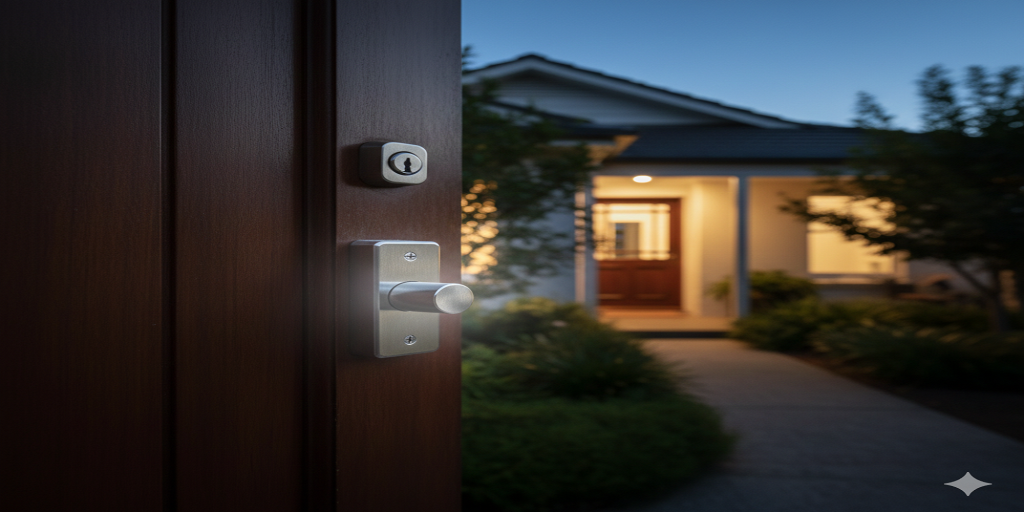
DIY may not be the best way to go every single time; if things get tough to handle, calling a professional will not be looked upon as a weakness. Contact a locksmith who specialises in residential areas if:
- You are putting in smart locks or electronic systems
- The door or the frame is either damaged or is not properly aligned
- You are working with a lock that is high security or a piece of hardware that is of a special type
- Your door is old, custom-made, or of a heritage style
- You have doubts about whether you are measuring or drilling correctly
- You are renting, and there is a certain type of lock that has to be used
Spending around $200 for professional installation may prevent you from incurring hundreds of dollars in mistakes, tools, and time. If there is any uncertainty, Clockwork Locksmiths can provide a free evaluation.
Why Professional Installation Matters (Clockwork Positioning)
DIY projects are fun and enjoyable, but sometimes expert installation could mean less hassle and more security for the long run. Clockwork Locksmiths carries out security lock installations that are thoroughly licensed, conforming to regulations, warranty-backed and certified by the Australian Standards. We use special jigs and alignment tools that guarantee a perfect fit at the first attempt, whether you are installing deadlocks, changing to a security door lock or handling difficult frames.
We do the whole range from smart locks to heavy-duty deadbolts, and we provide lock installation Sydney service with professional quality, clear-cut pricing, and no surprises. We have a 24/7 service in case anything goes wrong after hours.
Want to eliminate the stress? We are at your service.
Final Takeaway & CTA
Absolutely! A house lock can be installed by yourself. Just be accurate with the measurements, follow every step, and know your limitations. Do-it-yourself is a wise choice whenever you are sure; on the contrary, hiring a professional is a wise choice whenever you consider time, accuracy, and stress-free work as your priorities. Regardless of the choice, your home’s security will improve, and that is what really counts.