


Fire Door Regulations in NSW: Compliance and What You Need to Know
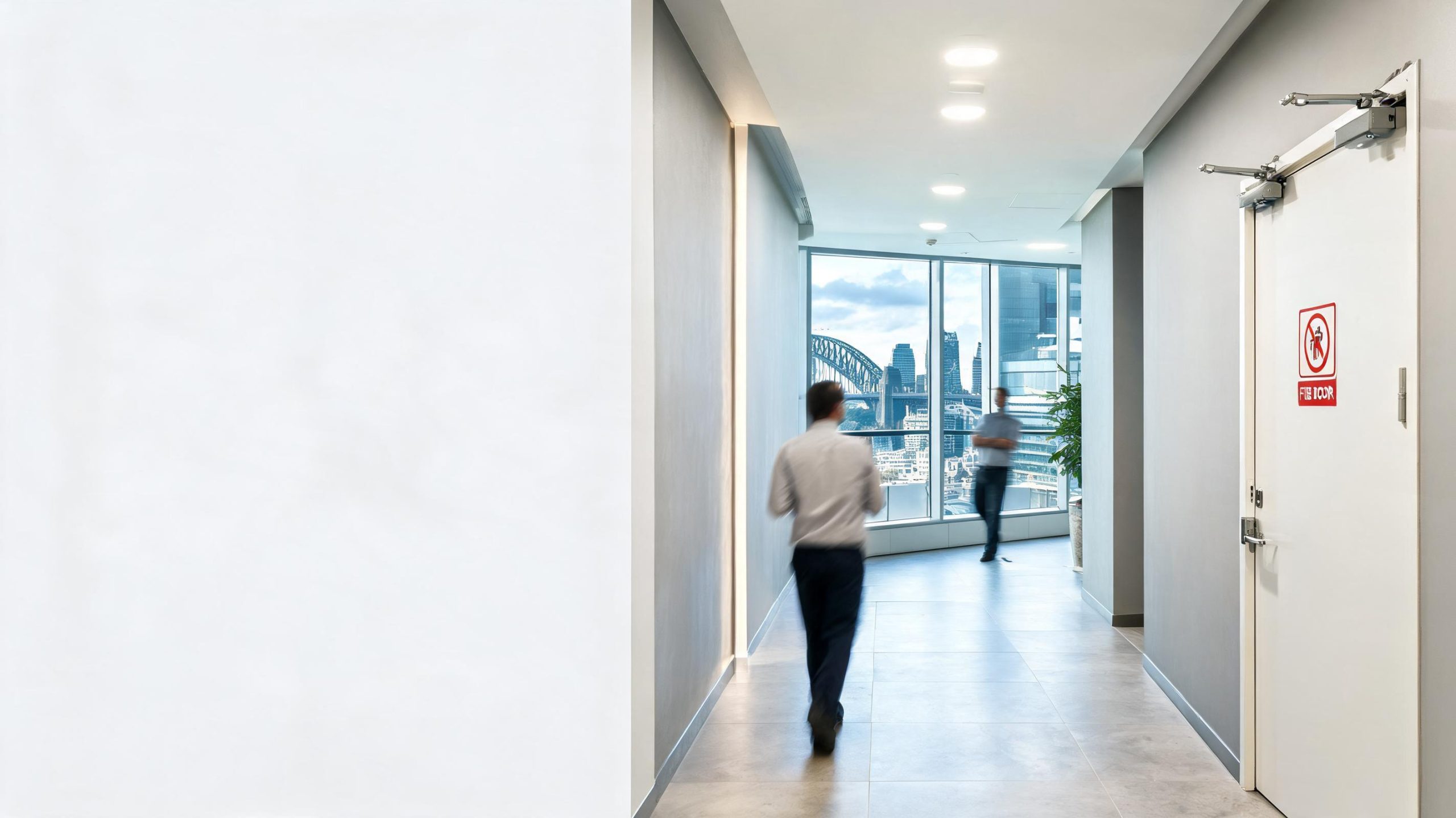
Fire doors are a critical part of a building’s passive fire-protection system. When correctly installed and maintained, they help contain fire and smoke, protect evacuation routes, and give occupants more time to leave the building safely.
In New South Wales, fire doors are required in many commercial, strata and other regulated buildings. Building owners and managers must ensure that applicable essential fire-safety measures remain operational and are maintained according to the standards specified for their building.
This guide is for strata committees, building managers, business owners and anyone responsible for building fire safety. It explains what fire doors do, the important NSW requirements, common maintenance problems and how Clockwork Locksmiths may assist with relevant locks, latches, door closers and other door hardware.
What Are Fire Doors and Why Do They Exist?
A fire door is a complete, tested door assembly designed to resist the spread of fire for a specified period. In Australia, fire doors are generally identified by a Fire Resistance Level, or FRL, such as –/60/30. The required rating depends on the building, the location of the door and the applicable fire-safety requirements.
A fire-door assembly can include the door leaf, frame, hinges, latch, door closer and other approved components. It may also contain fire-resistant seals where these form part of the tested and certified door system. Every component is important because unauthorised alterations or incompatible hardware can affect the performance of the complete assembly.
Fire doors are commonly installed around fire-isolated stairs, passageways, exits, service areas, car parks and entrances between sole-occupancy units and common areas in certain apartment buildings. Their purpose is simple but extremely important: to help contain a fire and protect evacuation routes while people leave the building and emergency services respond.
Fire doors are therefore not merely ordinary doors with special hardware. They form part of the building’s overall fire-safety system.
NSW Fire Door Regulations – The Legal Requirements
Fire-door requirements in New South Wales can involve the National Construction Code, the building’s Fire Safety Schedule and applicable Australian Standards.
AS 1905.1 addresses fire-resistant doorsets, including their construction and installation. The National Construction Code requires applicable fire doors to comply with AS 1905.1 and to achieve the Fire Resistance Level required for their particular location.
Routine inspection, testing and maintenance requirements may also be governed by AS 1851-2012. From 13 February 2026, applicable essential fire-safety measures in existing and new Class 1b and Class 2–9 buildings in NSW must be maintained in accordance with AS 1851-2012, unless an approved performance solution applies.
The exact requirements for an individual property depend on its classification, approvals and Fire Safety Schedule. Building owners should check the Fire Safety Schedule or Annual Fire Safety Statement to identify the measures and standards that apply to their building.
Where a fire door is required, it generally needs to remain operational and capable of performing its intended function. This means it should close correctly, latch where required and remain free from unauthorised alterations or obstructions.
Clockwork Locksmiths can assist with relevant fire-door hardware, including suitable locks, latches and door closers. Formal fire-safety assessments and Annual Fire Safety Statements must be handled by an appropriately accredited fire-safety practitioner.
Inspection Checklist – What Fire-Door Inspections Look For
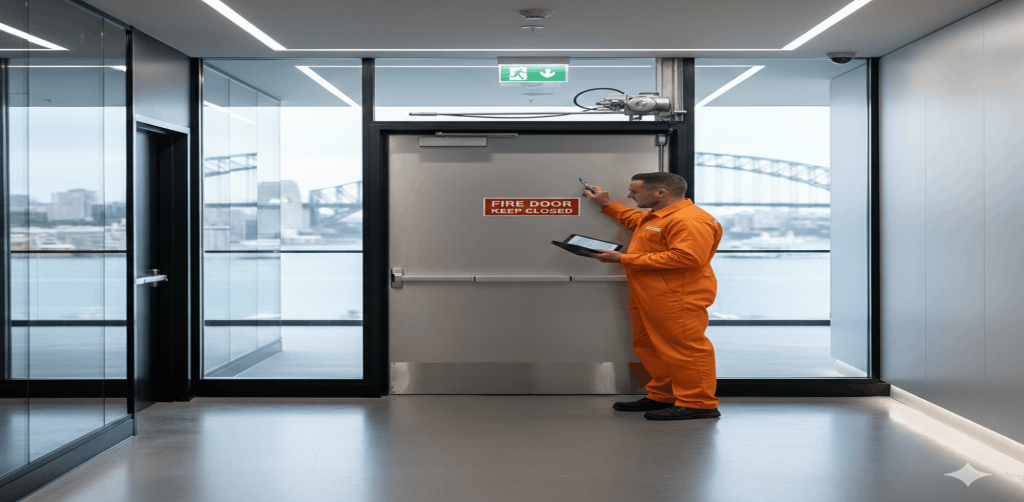
A proper fire-door inspection involves more than checking whether the door closes. The complete doorset and its operation need to be considered against the building’s requirements and the applicable standard.
Common inspection points include:
Door operation: The door should open and close correctly. Where a self-closing device is required, the door should return to the closed position without assistance.
Latching: Where latching is required, the latch should engage correctly when the door closes.
Clearances: The gaps around and beneath the door should be checked against the permitted clearances for that particular doorset. There is no single measurement that should be assumed to apply to every fire door.
Seals: Where seals form part of the certified assembly, they should remain intact, undamaged and free from paint or other materials that could interfere with their operation.
Hinges: Hinges should be suitable for the doorset, securely mounted and free from damage that could prevent correct operation.
Door closer: The closer should operate smoothly and bring the door fully into its closed and latched position where required.
Signage: Required signs, such as “FIRE SAFETY DOOR – DO NOT OBSTRUCT – DO NOT KEEP OPEN,” should be present, legible and correctly positioned.
Obstructions: Wedges, door stops, furniture and equipment should not prevent a required fire door from closing. Approved automatic hold-open systems are different and must operate as designed.
Condition: The door, frame and hardware should be checked for damage, wear, holes and unauthorised alterations.
Identification and documentation: Compliance tags, labels, inspection records and maintenance documentation should be present and kept current where required.
If there is uncertainty about a door’s rating, permitted clearances or approved components, it should be reviewed by a suitably competent fire-door professional.
Common Fire Door Compliance Mistakes
Even responsible building managers and business owners can encounter relatively simple fire-door problems. Common issues found in commercial and strata properties include:
- Wedging or holding fire doors open for ventilation or convenience
- Installing locks, latches or other hardware that is not suitable for the particular fire-door assembly
- Replacing approved components without checking the doorset’s certification or requirements
- Ignoring faulty or poorly adjusted door closers
- Allowing excessive gaps to develop around the door
- Painting over seals, labels, tags or other important components
- Drilling holes or making unauthorised alterations to the door or frame
- Failing to arrange the required inspections and maintenance
- Failing to keep the required maintenance records
- Allowing furniture, stored items or equipment to obstruct the door
A minor-looking alteration can affect the performance of the complete doorset. Building managers should therefore obtain competent advice before changing locks, fitting access-control equipment or modifying a fire door.
Maintenance and Ongoing Compliance
Fire-door compliance is not a task that can be completed once and then forgotten. Doors and hardware experience regular use, and closers, hinges, locks and latches can wear, move out of alignment or become damaged over time.
Inspection and servicing frequencies should follow AS 1851-2012, the building’s Fire Safety Schedule and any other applicable requirements. Building owners should not rely on a general monthly, quarterly or annual interval without first confirming what applies to their property.
Important maintenance practices include:
- Checking that doors close and latch correctly
- Arranging prompt repairs when faults or damage are identified
- Keeping the doorway clear of wedges and obstructions
- Checking approved seals and other components for damage
- Servicing or replacing faulty locks, latches and door closers with suitable components
- Avoiding unauthorised drilling, cutting or hardware changes
- Keeping inspection, testing and maintenance records current
- Retaining the required physical logbook on site
- Planning for professional repair or replacement when a doorset reaches the end of its serviceable life
From 13 February 2026, NSW building owners covered by the new AS 1851-2012 requirements must keep the prescribed maintenance records for at least seven years and make them available for inspection.
A preventive approach helps identify problems before they become critical safety defects or interfere with the building’s Annual Fire Safety Statement.
How Clockwork Locksmiths Helps
Clockwork Locksmiths provides commercial and strata locksmith services across Sydney. We can assist building managers, businesses and owners corporations with relevant door hardware problems that may prevent a door from operating correctly.
Our services can include:
- Inspection of locks, latches, door closers and related door hardware
- Repair or replacement of faulty door closers
- Supply and installation of suitable locks and latching hardware
- Fire-rated deadlatch solutions for applicable unit doors
- Hardware adjustments to help doors close and latch correctly
- Commercial and strata door maintenance
- Emergency locksmith repairs available 24/7
- Support for offices, apartment buildings, warehouses and retail premises
Any product installed on a fire door must be suitable for the specific doorset and its certification. Where a matter falls outside the scope of locksmithing, or a formal fire-safety assessment is required, the building owner should engage a suitably competent fire-door contractor or an Accredited Practitioner (Fire Safety).
Membership of the Master Locksmiths Association of Australasia reflects our commitment to professional locksmith services. However, locksmith association membership should not be confused with accreditation to issue an Annual Fire Safety Statement.
Get Your Fire-Door Hardware Checked
Fire-door and exit-door problems should not be left until the next audit or an emergency. A faulty closer, unsuitable lock or door that does not latch correctly may prevent the doorset from performing as intended.
Contact Clockwork Locksmiths for a no-obligation review of your fire-door locks, latches, closers and related hardware. We will identify relevant hardware problems, explain the available options and let you know when assistance from a fire-door specialist or accredited fire-safety practitioner may be required.
Call 1800 256 259 to discuss fire-door hardware repairs or commercial locksmith services in Sydney.