


How to Fix Door Lock Issues: Common Problems and Easy DIY Fixes
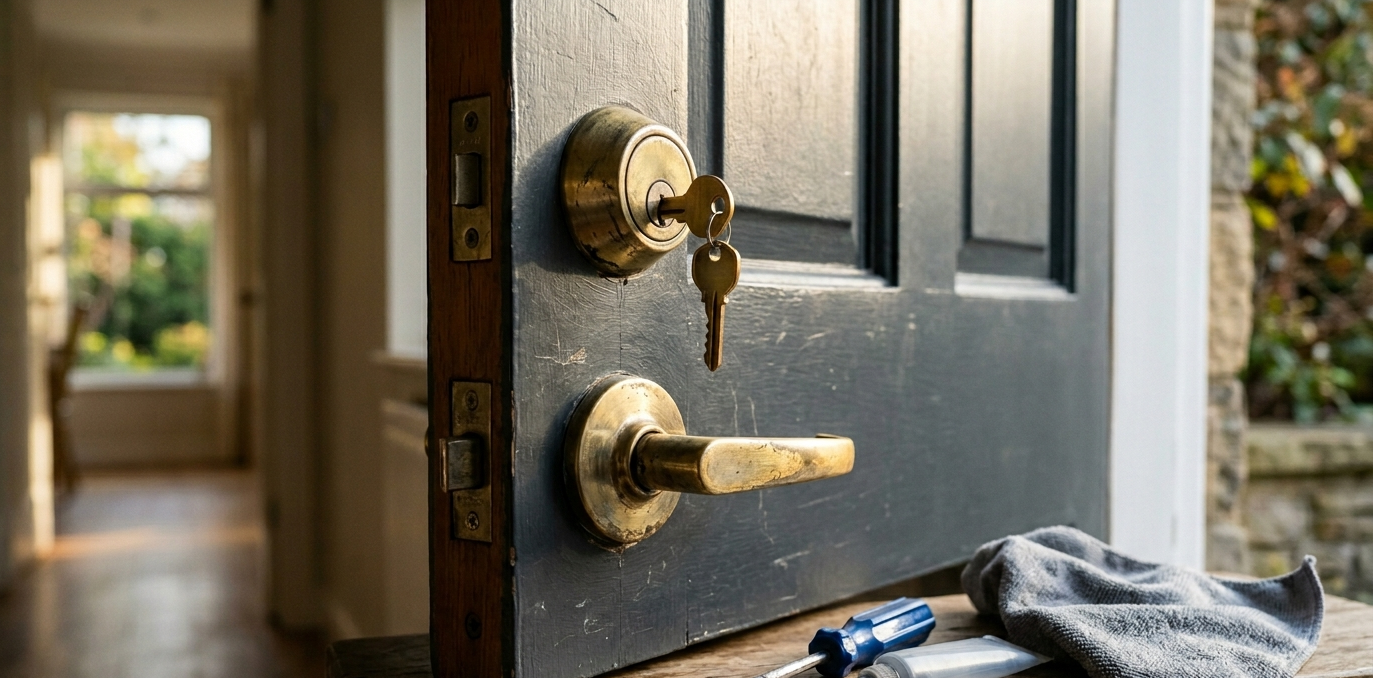
Door locks are subjected to heavy-duty use every day, and it is not surprising that they start malfunctioning after a while. Gradually, dust, parts that are worn out, screws that have become loose, and even door movement can all contribute to locks that are sticky, noisy, jammed, or not functioning correctly.
The silver lining? Most of the frequent door lock problems can be dealt with through a quick, safe, and easy DIY method. We will guide you in this article on how to fix door lock problems by yourself, and when you should get a professional locksmith in Sydney.
Common Door Lock Problems Explained
1. Lock sticks or turns hard
Dirt buildup inside the cylinder, lack of lubrication, or worn internal elements usually cause this problem.
2. The key won’t go in or turn
The key could be worn out, the lock could be dirty, or the cylinder pins might be sticking; all these could be the reasons for the situation.
3. Door latch fails to catch
Often it’s a very simple case of misalignment of the door latch; the door or frame has slightly shifted, so the latch no longer fits with the strike plate.
4. Loose lock or door knob
The screws inside the lock mechanism loosen from time to time due to use or door vibration.
5. Key broke or stuck
A worn key or a stiff lock can result in keys snapping or getting stuck in the cylinder.
Most of the issues can be resolved with a few DIY steps, and we will guide you through the process next.
DIY Tools and Preparation Needed
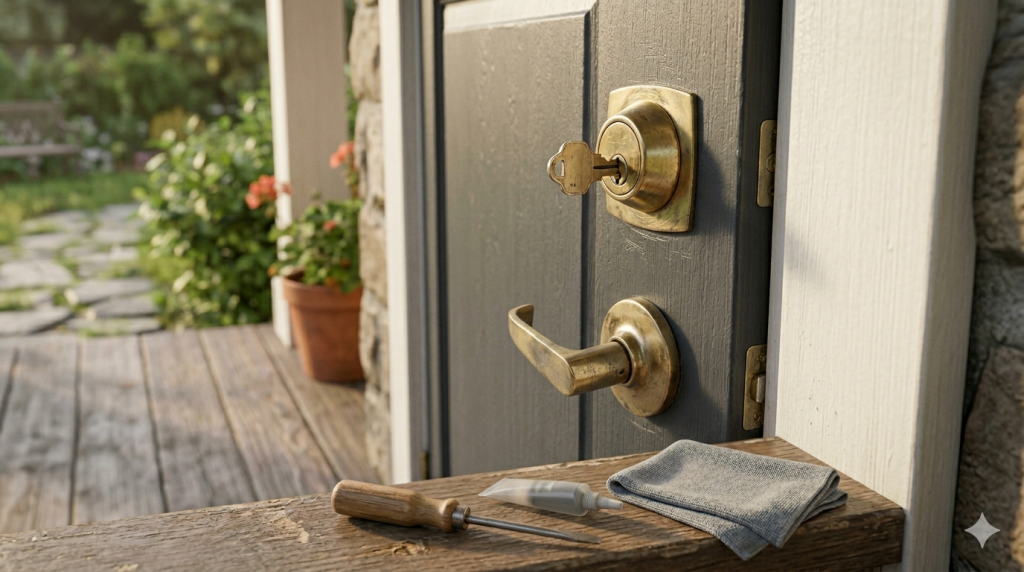
The majority of homeowners usually have the following items already:
- Screwdriver (Phillips or flathead, based on the lock type)
- Graphite powder or silicone lubricant (oil-based sprays are not recommended)
- Small brush or cotton buds
- Tweezers or a broken key extractor
- Level or ruler for checking alignment
- Microfiber cloth
Clean the area around the lock before starting any door lock repairs. Wipe it clean, remove dust and dirt, and check the alignment between the latch and strike plate. And keep in mind that: forcing a key is “the mother”, getting it snapped and making the problem worse.
Step-by-Step DIY Fixes for Common Issues
1. Lubricating a Sticky or Hard-to-Turn Lock
- Unlock the keyhole with a small puff of either graphite powder or silicone spray.
- Insert the key and turn it very gently a few times so that the lubricant spreads properly.
- Use a cloth to remove any extra residue that was left outside around the lock.
- Lastly, test the lock again, but this time do not push it.
2. Fixing a Key That Won’t Turn
- First of all, make sure that the key you are using is the right one (it’s an easy mistake!).
- Secondly, use a brush or an air duster to clean the keyway.
- Thirdly, lubricate the lock as indicated before.
- Fourthly, check the door alignment, as sometimes the latch remains under pressure, which makes it hard to turn the key.
- Lastly, try turning the key while gently lifting or pulling the door.
3. Aligning the Door Latch and Strike Plate
- First, slowly close the door and notice where the latch meets the strike plate.
- Loosen the screws on the strike plate (but do not remove them).
- After that, reposition the plate either up, down, or sideways until the latch is perfectly aligned with it.
- Finally, tightly secure the screws.
4. Tightening a Loose Door Lock or Handle
- Look for screws on the inside face of the handle or lock.
- Tighten them firmly, but don’t overtighten, or you may strip the threads.
- Check on the exterior side that nothing is wobbling.
5. Removing a Broken or Stuck Key
- Use tweezers or a key extractor tool, not pliers, which may cause damage to the cylinder.
- Extract the key in a straight direction, not pulling at one corner.
- Gently lubricate the lock to make the removal easier.
- When the key is out, test the lock with a spare or newly cut key.
6. When DIY Isn’t Enough: Faulty Lock Cylinder
Should you attempt the above remedies and the lock remains unreliable, the only option left is to replace the cylinder. Experienced DIYers can do this, but if you are not sure, it is better to call in a locksmith to avoid door damage.
When to Call a Professional Locksmith
You should definitely call one when the following occurs:
1. There are problems with the electronic or smart lock
2. A part of the key has broken off, and it is inside the cylinder
3. There is physical damage to the door or lock
4. You have already tried to align it, but the latch still doesn’t catch
5. Even after lubrication, the lock still jams
6. You’re not sure whether the lock should be repaired or replaced
Then a valid professional will come in with all the necessary tools, replacement parts, and expertise to fix your problem efficiently and safely. You will also save on the costs of further damage, which may convert a $100 repair into a $400 door replacement.
Why Clockwork Locksmiths Should Be Your Go-To

Clockwork Locksmiths have been repairing door locks for Sydney homeowners and businesses for decades. The whole team is licensed, insured, and trained for everything, from simple to complicated smart lock diagnosis and repairs. Our service includes:
Quick door lock repairs as well as…
- Sydney-wide, 24/7 service
- Pricing that is clear, straightforward, and without any hidden fees
- Repairs, replacements, rekeying, and emergency lockouts
- All types of locks are well known, from standard cylinders to high-security systems
- Technicians who are nice and do the job right the first time
You deserve a trustworthy team when your locks fail to operate, and we are always available for assistance.
Final Call to Action
Have you applied the do-it-yourself methods, and yet the problem persists? Or do you simply want a lock repaired quickly and to a high standard? Well, Clockwork Locksmiths is here for you, at your service 24/7! 📞Dial 1800 256 259 or make an online appointment at your convenience. We can fix any problem, be it a locked-up lock, a key that won’t budge, or a door latch that needs adjusting, so that your house is safe again.