


How Do I Pick a Padlock? Techniques and Safety Advice for Beginners
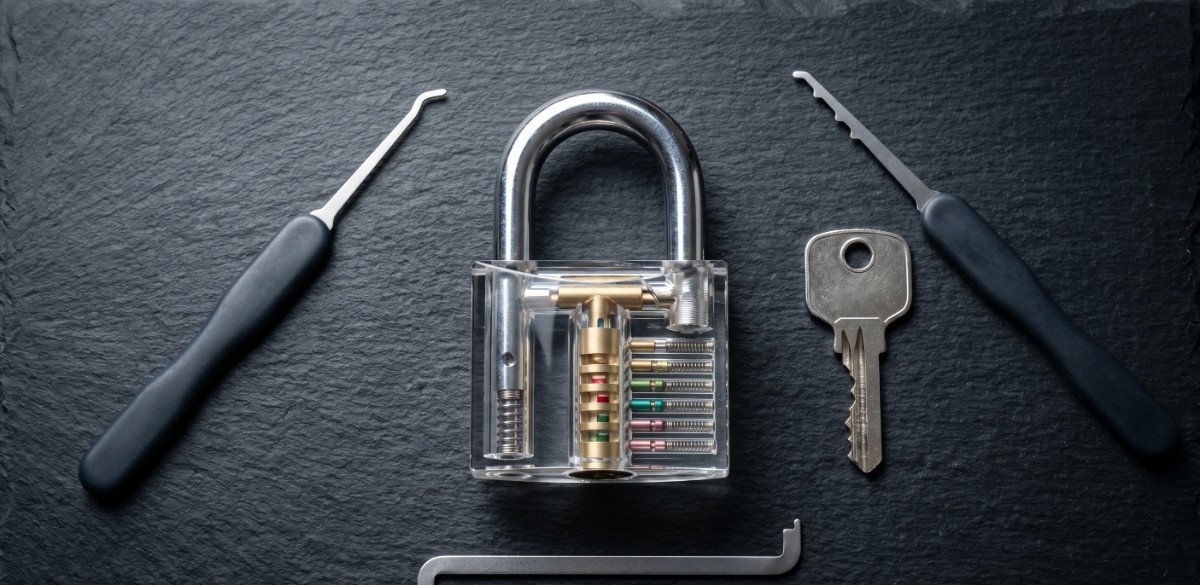
Padlock picking is the method of opening a padlock by manipulating its internal parts rather than using the original key. The actual aim is more pragmatic: understanding the inner workings of locks, learning to identify their weaknesses, and honing delicate finger skills in terms of tension and precision.
Nonetheless, it is crucial to first establish the proper mindset before proceeding to the actual padlock picking technique. Lock picking is a skill that should only be applied in a lawful, safe, and ethical manner, that is, on locks you own or have received explicit permission to open.
Understanding the Padlock Mechanism
The vast majority of padlocks one encounters daily feature a pin tumbler mechanism, which is also the most common type of locking mechanism in door locks. The cylinder is made up of two small pin sets:
- Key pins (the ones at the bottom), which have the same shape as the key
- Driver pins (the one at the top), which stop the turn of the plug
When the right key gets plugged in, the cuts on the key raise the key pins and driver pins to the exact position of the shear line, where the gap between the two is just right and touching.
Grasping this inner construction clarifies why good padlock-picking techniques emphasise soft, controlled movement of the pins. Each pin has to be coaxed to the right position until the plug can turn, which needs a lot of patience and practice instead of power or force.
Basic Tools Needed for Padlock Picking
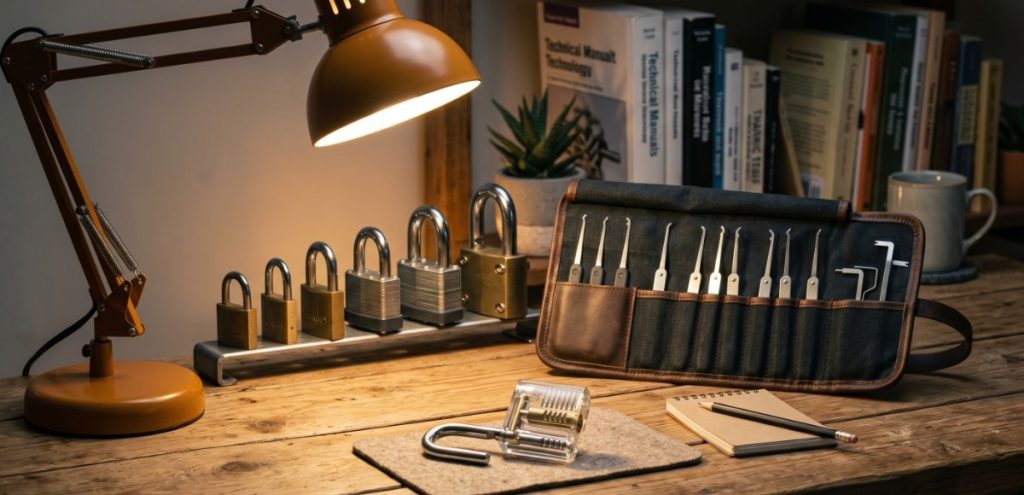
At the starting level, there are merely two basic instruments required for safe lock picking exploration:
- A tension wrench – for applying minimal rotational pressure to the lock.
- A pick tool – a hook pick or a rake.
A lot of beginners opt for a transparent practice lock that shows the pin movements while you work, which helps to make the learning procedure a lot easier and safer. Trustworthy lock-picking sets for beginners are easily accessible through hobby shops and instructional suppliers.
Keep in mind that in most places it is legal to have tools, but misusing them is not. Use the tools with the same care as you would any other professional equipment.
Step-by-Step Padlock Picking Techniques (Conceptual Only)
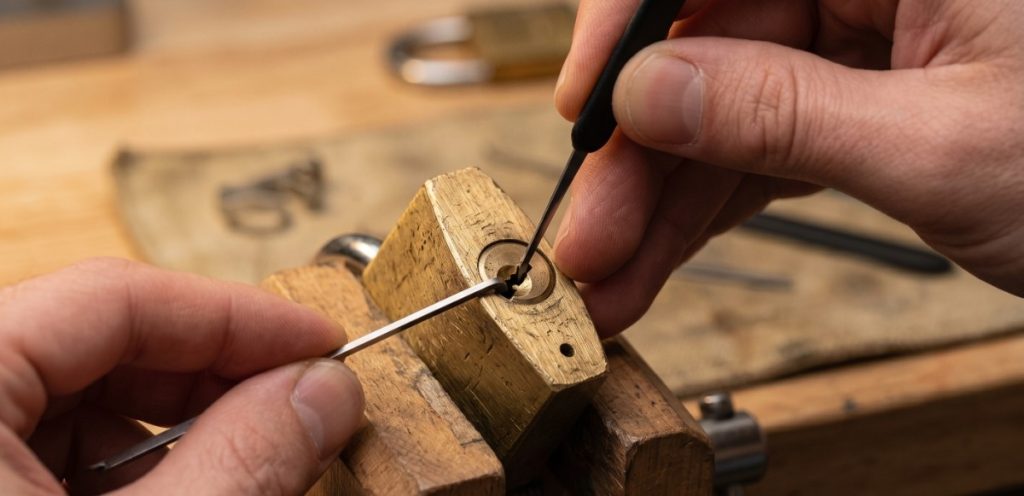
Lock picking has often been characterised as a combination of science and art. Even though every lock has a slightly different feel, most novices choose two basic methods to start with. The following descriptions remain abstract to promote safe and moral learning.
Technique 1: Single Pin Picking (SPP)
This is the most accurate lock-picking method and is perfect for developing real skill. SPP includes:
- Applying a very light rotational force with a tension wrench
- Determining which pin is bound (the one resisting the first movement)
- Raising the pins one by one until they are at the correct height
- Feeling for very slight clicks or movements as the pins are set
SPP educates you about the lock “language” – the tiny feedback that indicates when you are progressing. A lot of novice lock pickers find it challenging to be fun and even calming, similar to mechanical puzzle solving.
Technique 2: Raking
The ranking method is usually regarded as faster and, at the same time, less precise. The rake pick, instead of lifting each individual pin, moves back and forth across several pins. On the other hand, tensioning helps some pins to fall into place faster.
Raking is a good introduction to pick locks that require beginner’s skills. It gives quick results on easy locks, and at the same time, people train their hand coordination and sensitivity.
The Necessity of Practice
The success of both methods will depend on using a gentle touch and a lot of patience, not force. Over-tensioning causes the pins to jam, while under-tensioning allows them to reset. With practice, beginners gradually acquire a “feel” for the lock, which is neither rushable nor teachable by way of diagrams.
Common Challenges & How to Overcome Them
Every novice faces the same problems when acquiring the skill to unlock a padlock:
- The most common issue is applying too much tension. Just a tiny bit of extra pressure might stop the setting of the pins.
- Over-lifting of the pins: Going too high causes the pin stack to reset. A light and steady movement is the key to this.
- False sets: You might feel the lock almost turning, only to be stuck again. The common reason for this is that one pin is not set correctly.
- Inconsistent feedback: The feel of each lock is different, and the cheap locks can even provide misleading tactile responses.
Legal and Safety Considerations
To perform lock picking legally, you must first know whether it is legal. In Australia, having a lock pick set is usually legal, but using it without a license is not. Accessing a locked safe that does not belong to you or for which you have not obtained the owner’s permission can lead to jail time and heavy fines.
Do not forget:
- Only practise on your own locks or designated training locks.
- Do not ever pick a lock that protects property or valuable items, even if you are the owner.
- Tools should always be kept in a safe and non-obvious place.
- Knowledge of lock picking should be used ethically and respectfully.
A licensed professional locksmith can unlock the door without damaging your property in the process.
Why Learn Lock Picking? Practical Uses and Benefits
Learning to pick locks as a beginner isn’t really about opening the doors of others’ houses; it’s more fundamentally about gaining a better understanding of locks. There are many who see it as a hobby or a practice that develops concentration, hand-eye coordination, and problem-solving skills.
Understanding how locks function can also support the homeowner in recognising the insecure locks, getting the security to a higher level, and considering the price of good-quality hardware. Even professional locksmiths start their training learning these same basic techniques under ethical rules.
If lock picking is done in a legal and responsible manner, it can still be an educational and entertaining hobby.
When to Call Clockwork Locksmiths
Some padlocks, particularly high-security or weather-resistant types, are built to be non-pickable. If your lock won’t open, has become stuck, or is guarding something of great value, do not hesitate to contact a specialist.
Our company, Clockwork Locksmiths, offers licensed and insured services every day of the week across Sydney, including lockouts, padlock removal, security enhancements, and professional advice. We will unlock your lock in a safe and lawful manner, without causing any damage or resorting to guesswork.
Final Takeaway & Responsible Practice
Learning the fundamentals of picking a padlock is a very great skill, and at the same time, it can be very educational, provided it is done ethically and only on the locks you are allowed to open. Consider lock picking as a way to learn about security, not a way to gain access.
Are you experiencing a problem with a padlock or having a security issue? You can always call Clockwork Locksmiths!