


Quick answer: Rekeying is usually the most cost-effective choice when the existing locks are secure and in good working order. Replacing is the better investment when locks are damaged, outdated, poorly fitted or incompatible with the security features you want. In some homes, the best-value solution is to rekey the sound locks and replace only the weak or damaged ones.
Why New Homeowners Ask This Question
Moving into a new home is exciting, but it also raises questions about who still has access. Builders, agents, previous owners, tenants or contractors may have had copies of the keys. Many new homeowners therefore want to secure the property quickly without overspending.
The choice between rekeying and replacing locks is not always simple. The best path forward depends on the condition and compatibility of the existing hardware, as well as the homeowner’s security goals.
Let’s look at both options so you can make an informed decision that matches your needs and priorities.
What Rekeying Locks Means
Rekeying changes the internal pin configuration of a compatible lock cylinder so the old keys no longer work. A locksmith then provides new keys that match the revised configuration.
Because the existing lock hardware stays in place, rekeying can improve access control without the cost of buying an entirely new lock. However, it is only suitable when the lock is compatible, secure and in good working condition.
What Replacing Locks Means
Replacing locks means removing some or all of the existing locking hardware and installing new hardware.
This gives homeowners a fresh start with a new key system and, where suitable products are selected, improved security or convenience features. It is generally the better option if a lock is damaged, worn, outdated, poorly fitted or unsuitable for the household’s needs.
Cost Comparison: Rekeying vs. Replacing Locks
Rekeying is usually less expensive because it keeps the existing lock body and other suitable hardware in place. Replacing a lock generally costs more because the price includes new hardware and may involve additional installation time.
The exact price depends on the number of doors, lock type, condition and compatibility of the hardware, number of new keys required, service location, call-out fees and whether the property needs a security upgrade. Ask for an itemised quote that explains what is included rather than choosing solely on the lowest advertised price.
| Factor | Rekeying Existing Locks | Replacing Locks |
| Typical relative cost | Usually lower when the hardware is suitable | Usually higher because new hardware is required |
| Existing keys | Old keys stop working | Old keys stop working with the new lock |
| Existing hardware | Existing hardware | Some or all locking hardware is replaced |
| Installation time | Often quicker for compatible locks | May take longer depending on the door and hardware |
| Security outcome | Restores key control but does not upgrade weak hardware | Can improve security if better hardware is selected and installed correctly |
| Appearance | Usually unchanged | Can change the style, finish or function |
| Smart-lock upgrade | Generally not provided by a standard rekey | Possible with compatible products and doors |
| Best suited to | Sound, compatible locks when key control is the main concern | Damaged, worn, incompatible or outdated locks, or planned upgrades |
This table provides general guidance. A locksmith should inspect the locks, doors and frames before recommending work. Add current local price ranges here only if Clockwork Locksmiths can support them with genuine service data.*
When Rekeying Is the Better Choice
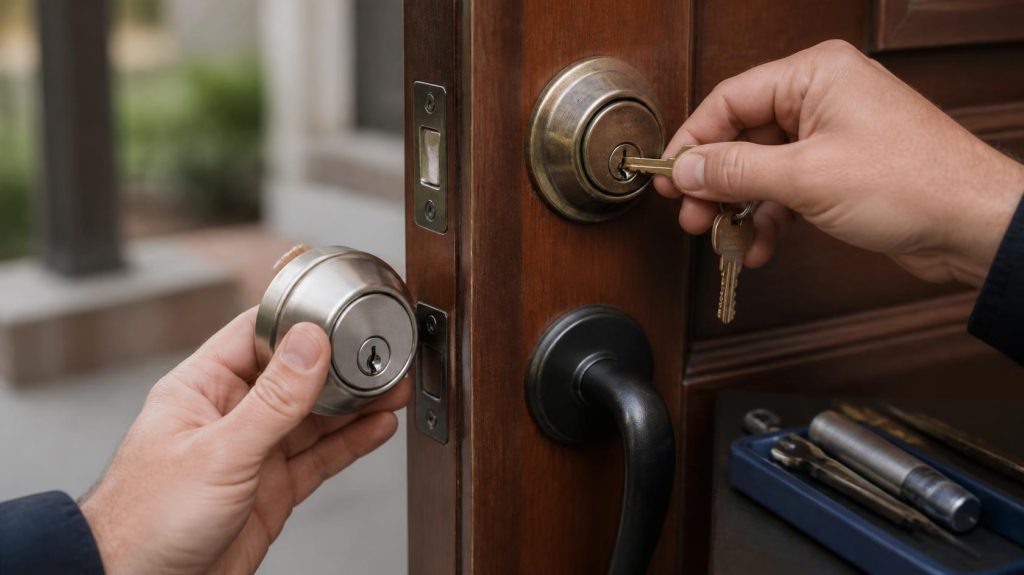
The following are situations where rekeying may make more sense:
The locks are still in good condition: Rekeying can restore key control without buying new hardware.
You want to stop old keys from working: If a key is lost, unaccounted for or previously held by someone else, rekeying prevents that key from operating the lock.
You have just bought the home and want fast, affordable security: Rekeying can ensure that keys held by previous owners, tenants or other people no longer provide access.
You like the current style of the locks and do not need an upgrade: Rekeying allows you to retain suitable existing hardware while changing which keys operate it.
You want compatible locks to use the same key: In some cases, a locksmith can key compatible locks alike, reducing the number of keys you need to carry.
Rekeying is often the best value for new homeowners who want peace of mind without replacing suitable hardware unnecessarily.
When Replacing Locks Is the Better Choice
Here are situations where replacement may be the wiser move:
The locks are old, damaged or difficult to use: Visible damage, wear, corrosion or unreliable operation may make replacement the safer long-term option.
You want stronger security hardware: Replacement allows you to select upgraded hardware appropriate for the door, frame and level of risk.
The current locks do not match the home’s security or access needs: New hardware may be needed to support a different locking system or improve usability.
You want to install smart locks, keypads or new deadbolts: These upgrades may require compatible doors, lock preparations and supporting hardware.
The existing locks cannot be rekeyed or keyed alike: Different brands, keyways or lock types may not be mutually compatible.
The upfront cost of replacement is usually higher, but it can be a worthwhile long-term investment when the existing hardware is weak, unreliable or unsuitable.
Security Considerations Beyond Cost
Cost matters, but it should not be the only consideration. Rekeying restores control over who has a working key; it does not repair a worn lock or turn low-quality hardware into a stronger security product.
As a new homeowner, consider the entire entry point, not only the key cylinder. A professional Sydney locksmith can inspect the lock, door, frame, hinges, strike plate and fixings before recommending whether to rekey, repair or replace the hardware.
Professional installation can also help identify issues such as loose hardware, poor alignment or an inadequate strike plate. Ask the locksmith to explain the products recommended, applicable warranties, maintenance needs and any limitations of the proposed work.
The aim is to choose a locking solution that provides appropriate security without unnecessary expense.
How to Decide What Your Home Needs
Start by asking the following questions:
Did you just move in and do not know who has keys?
Rekey suitable locks or replace unsuitable ones.
Are the locks secure, compatible and in good condition?
Rekey.
Is fast restoration of key control the main priority?
Are the locks damaged, outdated, unreliable or below your security requirements?
Replace.
Do you want smart-access features or different hardware?
Replace or upgrade.
Are some locks sound while others are damaged or incompatible?
Consider a combination of rekeying and replacement.
Still unsure? Ask Clockwork Locksmiths to inspect the locks and explain the available options before work begins.
Why New Homeowners Should Act Early
Door locks are an important part of protecting a home from unauthorised access. Waiting too long to restore key control leaves uncertainty about who may still have copies. Builders, agents, previous owners, contractors and other people may have handled keys during the property’s construction, sale or tenancy.
Arrange an assessment soon after settlement or before moving in where practical. In addition to external doors, consider garage-access doors, gates, mailbox locks, window locks, alarm codes and garage remotes.
Taking these steps early can help you feel confident about who can access the property from day one.
Make the Smart Choice for Your Home
Rekeying is usually the most cost-effective option when the existing locks are secure, compatible and in good condition. Replacing locks can be the better investment when the hardware is damaged, worn, weak, incompatible or unable to provide the features you need. Some homes benefit from a combination: rekey the suitable locks and replace only those that require an upgrade.
Assess your access concerns, budget and security goals, and seek professional advice when the condition or compatibility of the hardware is unclear.
Contact Clockwork Locksmiths for a lock assessment and clear advice about rekeying, replacement or a combination of both for your new home.